Building Systems That Scale
Why microservices and modern architecture patterns help your business grow without growing pains.
The Challenge of Growing Systems
As businesses grow, their software needs to grow with them. More customers, more data, more features, more complexity. But traditional approaches to building software often create systems that become slower, more fragile, and harder to change as they get bigger.
It's a bit like trying to renovate a house where all the walls are load-bearing. Want to move a door? You might bring down the whole building. Need to upgrade the plumbing? Better hope it doesn't affect the electrical wiring. Everything is connected to everything else, and changing one thing risks breaking ten others.
There's a better way. By building systems as collections of small, focused, independent services, what we call microservices, and organizing them around clear business concepts using domain-driven design, organizations can create systems that scale gracefully, adapt quickly, and stay maintainable even as they grow.
Traditional systems are like a single massive building where everything happens under one roof. Microservices are like a city with many specialized buildings, one for banking, one for shopping, one for healthcare. Each building operates independently, but they all work together to serve the city's needs. If the bank needs renovation, the hospital keeps running. If demand for shopping increases, you build more stores without touching anything else.
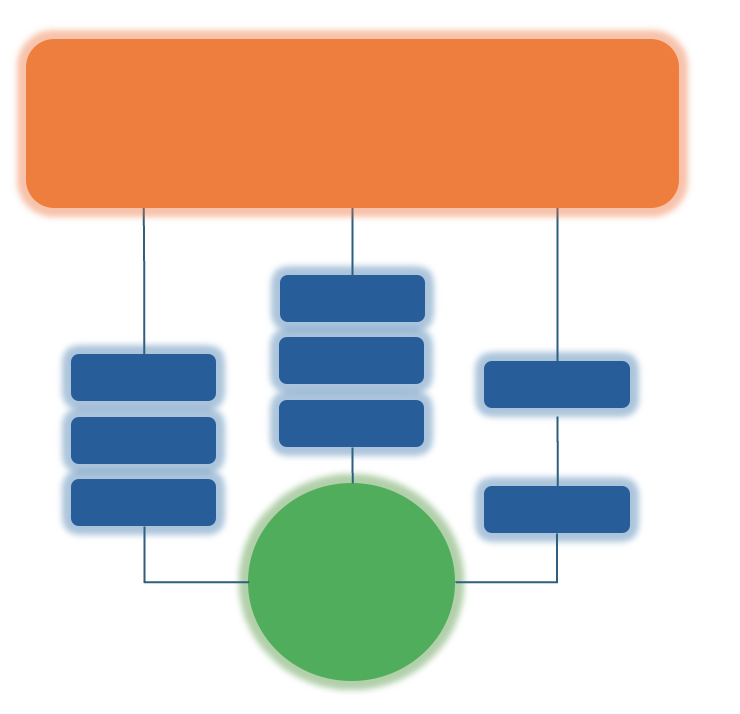
Traditional monolithic architecture vs. modern microservices approach
What Are Microservices?
A microservice is a small, self-contained piece of software that does one specific job and does it well. Instead of building one large application that handles everything, customer management, orders, inventory, payments, shipping, you build separate services, each responsible for one area.
Each microservice:
- Does one thing: Focuses on a specific business capability, making it easier to understand and maintain
- Stands alone: Can be updated, deployed, and scaled independently without affecting other services
- Owns its data: Manages its own information and doesn't share databases with other services
- Communicates clearly: Talks to other services through well-defined interfaces, like APIs or events
This isolation is the key to scalability. When one part of your business grows, say, your customer support queries triple, you can add more resources to just the customer service microservice without touching your order processing, inventory, or payment systems.
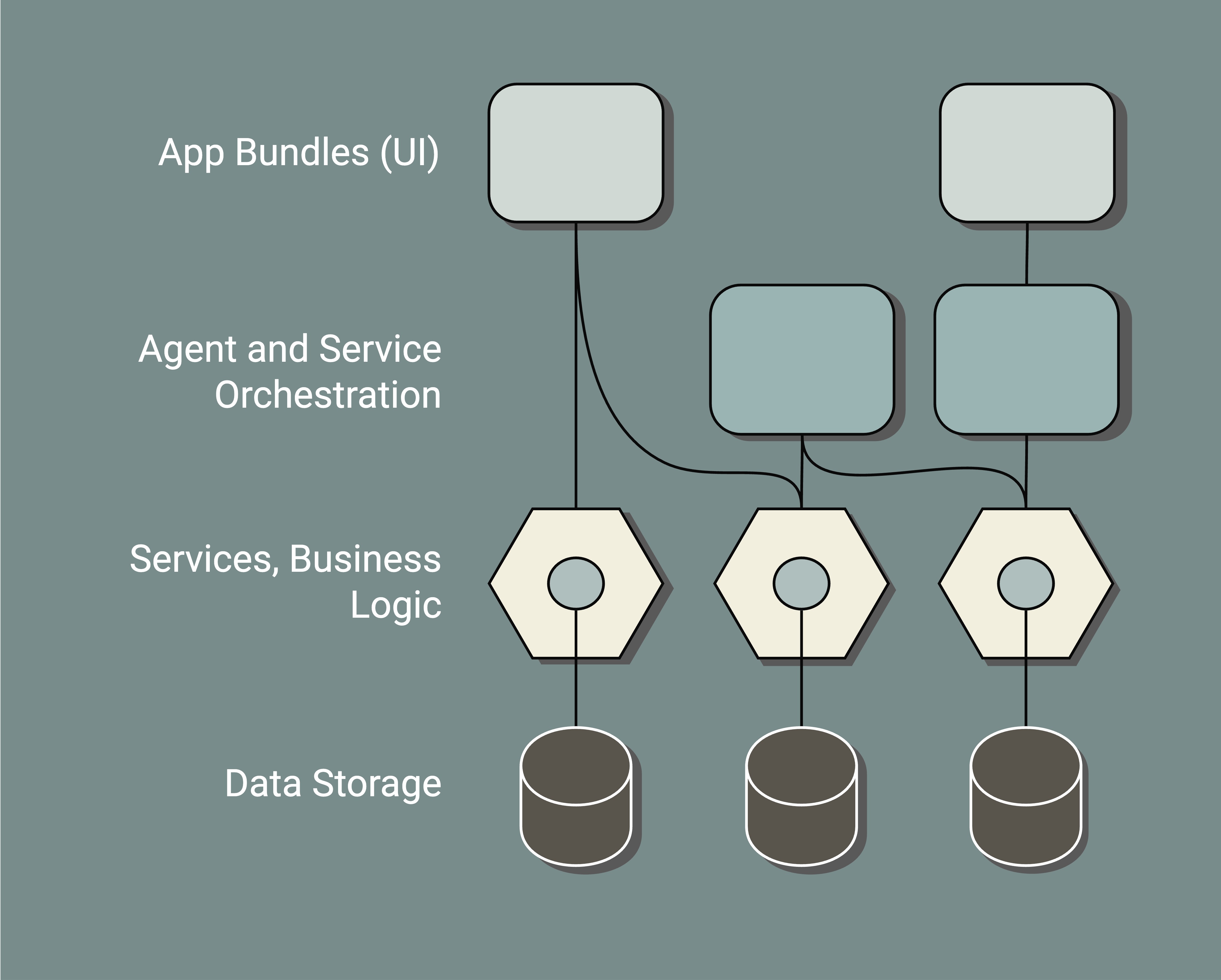
Independent microservices working together as a cohesive system
Why Small and Isolated Wins
Easier to Understand and Change
When a service is small and focused, a developer can understand what it does in hours, not weeks. A team can make changes confidently because they're working within clear boundaries. You're not trying to trace connections across thousands of files to understand how changing one thing might affect something else three layers removed.
Fail Independently
If your payment service experiences problems, your product catalog, customer profiles, and recommendation engine keep working. Customers can still browse, add items to their cart, and save their preferences. The business continues functioning, even if one area needs attention. Compare this to traditional systems where a single component failure can bring down the entire application.
Scale Only What Needs Scaling
Imagine a retail business during the holiday season. Search and browsing traffic might increase tenfold, but administrative functions stay the same. With microservices, you scale up the services handling customer traffic while the back-office services run unchanged. You pay for what you need, not what you don't.
Deploy Without Disruption
Need to add a new feature or fix a bug? Update just the service that needs changing. Deploy it during business hours if you want. The rest of your system keeps running. No need to take down the entire application, run massive test suites across every feature, or coordinate complex deployment schedules.
Companies using microservices report deployment frequencies measured in minutes or hours, not weeks or months. Teams can innovate faster, respond to customer feedback quicker, and scale their infrastructure more efficiently. The business becomes more agile without sacrificing stability.
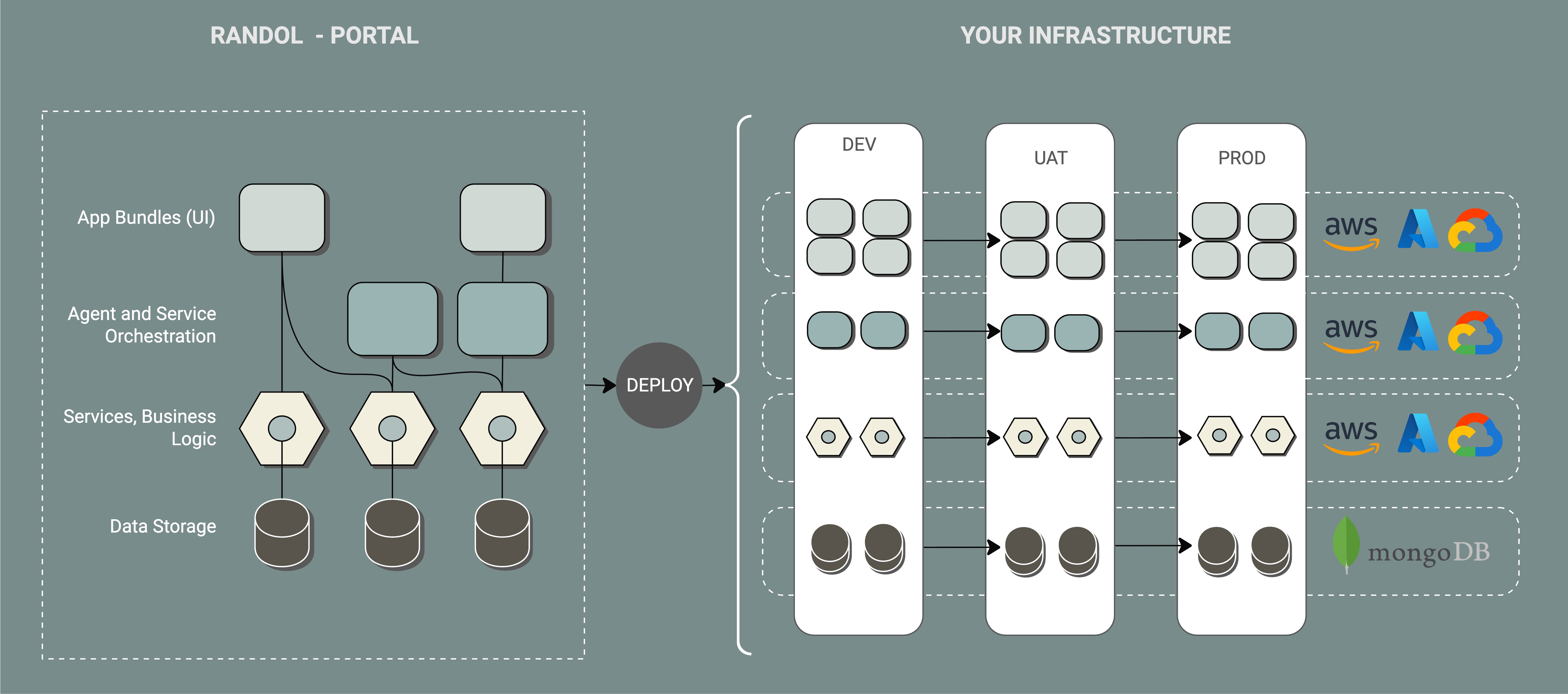
Independent deployment and scaling of microservices
Domain-Driven Design: Organizing Around Business Reality
Microservices tell you how to structure your system. Domain-driven design tells you what those services should be. It's about organizing software around the actual business domains and concepts that matter to your organization.
Instead of thinking in technical terms, databases, APIs, servers, you think in business terms: customers, orders, products, shipments, invoices. Each microservice represents a cohesive business capability with its own language, rules, and responsibilities.
Complex Business Logic, Simple Structure
Business rules can be intricate. Pricing might depend on customer type, order volume, geography, payment terms, and promotional campaigns. Inventory allocation might consider warehouse locations, shipping costs, delivery times, and reservation priorities. These complexities don't go away, they're part of reality.
Domain-driven design gives you the tools to model this complexity within each service while keeping the connections between services simple and clear. Each service becomes a focused expert in its domain, handling intricate logic internally while presenting clean, understandable interfaces to other services.
🎯 Aggregate Roots
The main concept in your domain that groups related information and behaviors. Think "Order" or "Customer Account", a cohesive unit the business thinks and talks about.
🧩 Entities
Important objects that have identity and lifecycle. A specific customer, a particular invoice, an individual product instance. Each one is unique and tracked over time.
⚙️ Domain Services
Business operations that don't naturally belong to a single entity. Calculating shipping costs, applying promotions, or validating credit, processes that involve multiple concepts.
📢 Events
Things that happen in the business that others might care about. "Order Placed," "Payment Received," "Shipment Dispatched", notifications that let services react to changes.
These patterns work together but remain loosely coupled. An order knows about its line items and shipping address. An inventory service reacts to "Order Placed" events to reserve stock. A fulfillment service starts its process when inventory confirms availability. Each service handles its responsibilities independently, coordinating through clear events and well-defined interactions.
Services communicate and coordinate, but they're not tightly bound together. They work as a team, not as conjoined twins. If you need to replace how payments are processed, update the payment service. Other services don't need to know or care about internal implementation details, they just keep using the same clear interface.
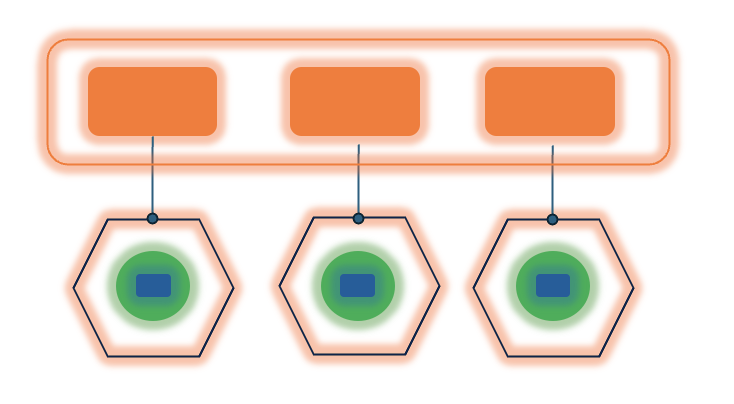
Domain-driven design organizing services around business capabilities
Storing Data: The Repository Pattern
Once your services process information and make changes, you need to store that data. The repository pattern provides a clean way to do this, separating your business logic from data storage concerns.
Think of a repository as a librarian. Your business logic says "save this customer order" or "find all pending shipments." The repository handles the details of where and how that information gets stored. Your business logic doesn't care whether data lives in a cloud database, local storage, or a distributed system, it just asks the repository, and the repository takes care of it.
This separation means you can change where and how data is stored without rewriting your business rules. Need to move from one database to another? Upgrade to a faster storage system? Add caching? The repository implementation changes, but your core business logic stays the same.
You want to borrow a book. You ask the librarian, "Do you have this book?" You don't need to know the library's filing system, whether books are organized by Dewey Decimal or author name, or which shelf holds what. The librarian handles those details. Similarly, your business logic asks the repository for data without worrying about database queries, indexes, or storage structures.
Repository pattern separating business logic from data storage
Document Stores: A Better Fit for Modern Systems
Traditional systems often use relational databases, where information is split across many tables connected by relationships. Think of it like storing all customer information in one table, all addresses in another, all orders in a third, phone numbers in a fourth, and so on. Every time you need complete information, the database has to jump between tables, following links and joining data together.
❌ Traditional Relational Approach
How it works: Data split across many tables with complex relationships between them.
Problems that emerge:
- Retrieving complete information requires joining many tables together
- Relationship graphs become tangled as systems grow
- Memory usage explodes tracking connections between tables
- Performance degrades with scale and complexity
- Changes to data structure require coordinated updates across multiple tables
- Difficult to scale horizontally, adding more servers doesn't help much
✓ Modern Document Store Approach
How it works: Complete information stored together as cohesive documents.
Benefits you gain:
- Retrieve complete information in a single operation, no joins needed
- Each document is self-contained and independent
- Memory usage stays predictable as you grow
- Performance remains consistent at massive scale
- Easy to update data structures without breaking existing documents
- Scales horizontally, add more servers, get more capacity
Aggregate Roots Match Collections
Here's where domain-driven design and document stores work beautifully together. Remember aggregate roots, the main business concepts like "Customer Order" or "Customer Account"? In document stores, each aggregate root maps to a collection (or container).
One collection holds all customer orders. Each order is stored as a complete document containing everything about that order, line items, shipping address, payment information, status history. You don't need to jump around collecting pieces from different tables. Load the order document, and you have everything.
This one-to-one mapping, aggregate root to collection, creates a natural alignment between how your business thinks about concepts and how data is physically stored. It's intuitive, efficient, and scalable.
Document stores shine at scale. Whether you're storing thousands of orders or billions, performance remains predictable. As your business grows, you add more storage capacity and spread data across more servers. Unlike traditional relational databases where relationship complexity grows exponentially with data volume, document stores maintain consistent performance because documents remain independent and self-contained.
Industry-Leading Document Stores
Two technologies lead the document store space, offering enterprise-grade capabilities with different strengths:
🍃 MongoDB
MongoDB is the world's leading document database, known for flexibility, powerful querying, and a rich ecosystem. It excels at handling complex, evolving data structures and provides advanced features like transactions, real-time analytics, and vector search for AI applications. Widely adopted and battle-tested at massive scale.
🌐 Azure Cosmos DB
Azure Cosmos DB is Microsoft's globally distributed, multi-model database service. Built for planet-scale applications, it offers guaranteed low latency, automatic global distribution, and comprehensive SLAs covering throughput, latency, availability, and consistency. Ideal for applications requiring worldwide reach and enterprise Microsoft integration.
Both technologies support the document store model that aligns naturally with microservices and domain-driven design. Both offer horizontal scaling, high availability, and the performance needed for modern, data-intensive applications. The choice often comes down to your existing cloud infrastructure, specific feature requirements, and organizational preferences.

Randol uses MongoDB as its default document store, with support for Azure Cosmos DB for organizations using Microsoft Azure. Your aggregate roots automatically map to collections, the repository pattern is implemented out of the box, and your microservices work seamlessly with document storage without you writing infrastructure code.
Why This Approach Matters for Your Business
These architectural patterns aren't about technology for technology's sake. They're about creating systems that support business growth and agility:
- Grow without breaking: Add new features, services, and capabilities without risking existing functionality
- Scale economically: Pay for what you need when you need it, scaling up busy services while leaving others untouched
- Adapt to change: Respond to market shifts, customer needs, and competitive pressures with speed and confidence
- Maintain stability: Isolate failures, update independently, and keep the business running even when individual components need attention
- Stay understandable: Keep systems organized around business realities, making them easier for teams to understand, maintain, and evolve
- Handle massive scale: Support millions of customers and billions of transactions without fundamental restructuring
The technical sophistication remains hidden beneath the surface. What stakeholders see is a system that's reliable, responsive, and ready for whatever the future brings. What development teams experience is clear structure, manageable complexity, and the ability to deliver value continuously.
Great architecture is like great city planning. You don't notice it when it's done well, traffic flows, services are accessible, the city adapts to growth and change. But poor planning becomes obvious quickly: gridlock, outages, slow response to problems. Microservices and domain-driven design provide the planning principles that let your software scale gracefully and adapt confidently.
Build Scalable Systems with Randol
Randol brings these architectural patterns to life without the complexity of implementing them from scratch. Get microservices, domain-driven design, document stores, and repository patterns working together seamlessly, so you can focus on your business, not infrastructure.
Discover Randol