
CRM Products Are Inside Out!

For many organisations, the CRM is no longer just a sales pipeline tool. It becomes a core business system, supporting complex business flows, rules engines, operational data stores, and case management. Over time, entire teams, processes, and performance metrics become deeply dependent on it.
Because of that reliance, it's worth asking a difficult question:
Are traditional CRM products architected in the right way for long-term ownership and growth?
In my experience, the answer is often no. Many CRM platforms are, quite literally, inside out.
The Data-First Trap
If we look at a traditional CRM implementation, the starting point is almost always the same: entity design.
This makes sense on the surface. We define entities, set up relationships, and store everything in a single database. Once the data model is in place, we build forms directly on top of those entities. Very quickly, we get basic read, search, and update functionality. Early momentum feels great.
But this is where the first major problem begins.
By placing forms directly on top of data entities, we create tight coupling between:
- The user interface
- The domain model
- The underlying data structure
Your UI becomes inseparable from your data schema.
When the underlying structure needs to change, perhaps to support new business logic, alternative storage strategies, or performance improvements, the UI must change with it. That may sound trivial from a purely technical perspective, but in real organisations it is anything but.
Changing forms often means:
- Redefining business processes
- Retraining users
- Retesting workflows
- Managing release risk
At scale, this becomes expensive, slow, and disruptive.
Business Logic in the Wrong Place
The second major challenge with the CRM product model is how business logic is implemented.
In many CRM platforms, custom logic lives in plugins. These plugins are typically tied to entity updates and are triggered by specific UI actions or lifecycle events.
From my perspective, after many years building business-critical software, this is completely inside out.
Attaching business logic to entity updates is what I would describe as externalising the logic. And that comes with serious downsides.
Because the logic is externalised:
- It is not centralised
- It is not naturally reusable
- It encourages duplication
You can easily end up with two different forms updating the same entity, each triggering slightly different versions of what is logically the same business rule.
In well-run teams, developers try to keep these plugins aligned. But especially in large organisations with many plugins, logic drifts. Updates get missed. Tests don't cover every path. Behaviour becomes inconsistent.
This isn't a theoretical problem. It's one I see repeatedly in mature CRM implementations.
Plugin Chains and Unpredictable Behaviour
There's another compounding issue.
Plugins are easy to add, so over time they accumulate. New requirements lead to new plugins. Plugins trigger other plugins. Execution chains grow longer and harder to reason about.
The result?
- Degraded performance
- Unpredictable execution paths
- Difficulty understanding what logic runs, and when
- Increased risk when making changes
At a certain point, even small updates become dangerous because it's no longer clear which plugins will fire in response to an entity update.
When you combine:
- A single, overloaded database
- UI tightly coupled to entities
- Chained plugins executing opaque logic
You end up with systems that are easy to start with, but extremely difficult to own long-term.
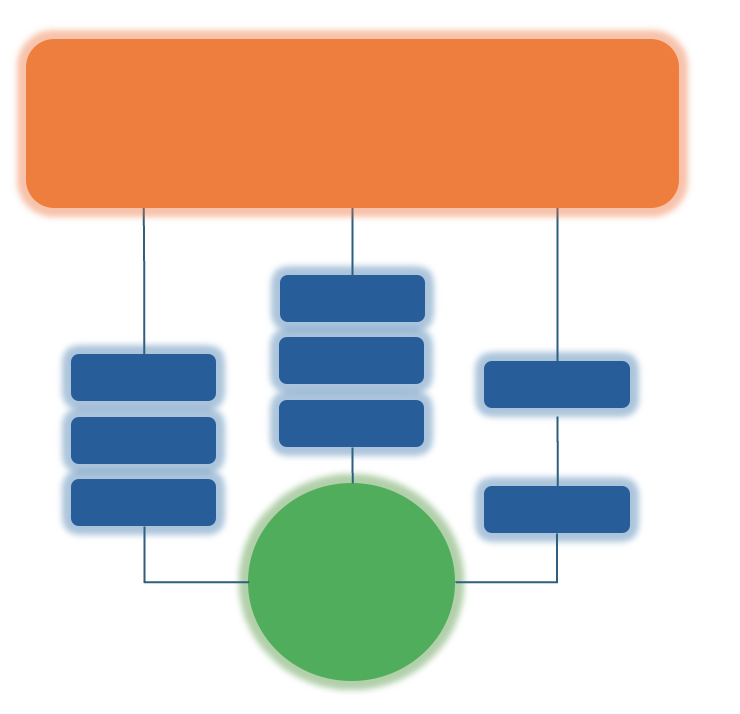
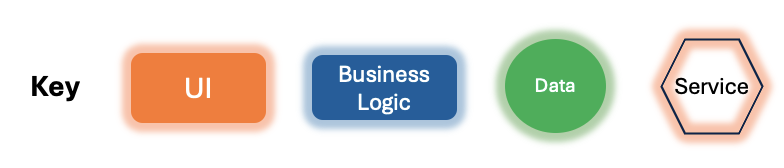
[Figure 1.1 CRM Architecture]
So What's the Alternative?
Given how critical CRM systems are to modern organisations, we must design them for growth, not just for fast initial delivery.
CRM solutions inevitably expand. They become central platforms. That means they must be:
- Scalable
- Performant
- Predictable
- Maintainable
The same principles apply as with any mission-critical business system:
- Keep components small and focused
- Centralise business logic
- Distribute execution for scalability
- Separate concerns clearly
- Avoid single points of performance bottleneck
This is where domain-driven design becomes powerful. By treating business logic as a first-class concern, centralised, explicit, and testable, you avoid coupling it to UI components. Data can still be composed for specific use cases, but without forcing everything through a single monolithic model.
Domain models are defined around their logic and behaviour, so logic is the centre and reused as much as the data. Entities are protected and insulated by specific services, so data and logic model can evolve independently from our user forms and screens.
Architectures built this way allow systems like customer CRMS, 360 platforms or case-management engines to become core business components, systems that can be evolved, scaled, secured, and extended about over time without costly disruption to business processes and user interaction.
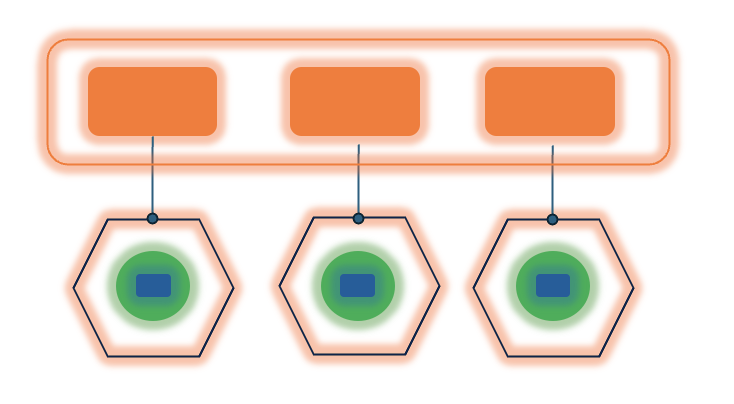
[Figure 1.2 Domain Driven Approach]
The Cost Barrier, and Why It's Changing
Historically, the biggest barrier to these approaches has been time and cost. Custom-built platforms of this nature were expensive and slow to deliver, which pushed organisations toward off-the-shelf CRM products despite their long-term drawbacks.
That reality is changing.
New tools, platforms, and AI-assisted development approaches now make it possible to build well-architected, scalable systems in timescales comparable to, and often faster than, traditional CRM implementations.
This shift is one of the core drivers behind RANDOL: removing the historical barriers to building scalable, maintainable business systems without sacrificing delivery speed.
We no longer have to choose between quality and time-to-market.
We can, and should, have both.